
The Siren Headline That Just Cost You Thousands
Nov 10, 2025
Why Sensational News Hijacks Your Judgment
The moment a headline screams “MARKET CRASH IMMINENT,” something primitive takes over. Your pulse spikes. Your mouse hovers near “Sell.” You stop thinking like an investor and start behaving like prey. Media sensationalism does not seek to inform you. It aims to mobilise you. Movement means clicks, ratings, watch time, and revenue. Whether your account bleeds is irrelevant to the machinery. Every flashing alert is crafted to override analysis and trigger instinct. The casualty is not the headline writer’s conscience. It is your capital.
The Dopamine Trap
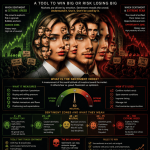
How Your Brain Becomes Complicit in Its Own Sabotage. Financial media understands human wiring better than most psychologists. They exploit three predictable circuits:
Loss aversion: The brain feels a two per cent loss harder than a five per cent gain. So “Markets Plunge” wins over “Markets Normalise,” even if the numbers say otherwise.
Confirmation bias: Algorithms tailor the news to your beliefs. If you think AI will dominate the world, you’ll receive stories that feed the fantasy. If you distrust crypto, you’ll see articles reinforcing the apocalypse. Your feed becomes a comfort blanket rather than a guide.
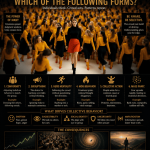
Herd instinct: Media frames behaviour as momentum. “Everyone’s buying,” “Big money exits,” “Retail rushes in.” This primes your fear of missing out or being the last fool standing. Emotion becomes the strategy. Strategy becomes an afterthought.
By the time you realise you reacted to manufactured urgency rather than real data, the damage is already locked in.
Meme Stock Euphoria
When Headlines Ignite a Frenzy and Retail Pays the Bill
GameStop 2021 remains the purest example of headline-driven hysteria. The media elevated it from a distressed retailer to a cultural rebellion. It became Shakespeare for Reddit. A populist uprising disguised as a stock trade. But beneath the drama lay a mathematical truth: most retail traders who entered late lost money. The narrative was intoxicating, but the execution was lethal.
The same cycle replayed in crypto’s 2021 surge, AI’s 2023 mania, and countless other headline-fuelled stampedes. Sensationalism does not observe markets. It accelerates them. A story becomes movement. Movement becomes frenetic. Frenzy becomes ruin.
Using Sensationalism as a Weapon
The Contrarian Advantage When Headlines Reach Fever Pitch. The crowd reacts. The contrarian calculates. Media sensationalism becomes predictive once you learn how to read it.
The Magazine Cover Curse: When a trend reaches mainstream publication covers, it has often peaked. TIME hailed Bitcoin in late 2017. Weeks later, it lost eighty per cent. Newsweek once crowned Jeff Bezos “The New King.” Amazon plunged soon after. Mass attention is rarely a buy signal. It’s usually the exit bell.
The Silence Principle: Real opportunity grows in quiet corners. While headlines chase AI titans, disciplined investors buy unloved sectors priced at discounts. When crypto fills every feed, contrarians build positions in industrials, commodities, and dull but essential businesses.
The 48 Hour Rule: Never trade within forty-eight hours of consuming sensational news. Emotion needs a cooling-off period. Data needs to settle. What feels urgent today becomes irrelevant tomorrow. Clarity returns only when the emotional fog dissipates.
The Investor’s Reality
Media is not a bystander in financial markets. It is a participant, a catalyst, and at times a destabilising agent. When a headline goes viral, capital flows move. Not because fundamentals changed, but because millions of investors surrendered to emotional reflex.
Your job is to retain the perspective the crowd forfeits. Understand that most media narratives arrive late, exaggerated, and polluted by emotional framing. Markets move long before newsrooms catch up. By the time a story hits your screen, the trade is usually over.
The Psychology of Financial Pornography
Let’s call it what it is: most financial media is pornography for your investing brain. It promises easy gratification, delivers empty calories, and leaves you worse off than before. The constant stimulation creates addiction to market drama while atrophying your capacity for patient, strategic thinking.
Consider the typical financial news cycle: Morning panic (“Futures down!”), midday analysis (“What this means for your portfolio”), evening wrap-up (“How to position for tomorrow”). It’s designed to keep you engaged, not educated, informed, or intelligent.
The most successful investors—Buffett, Munger, Lynch—famously ignore daily market noise. They understand that media sensationalism is the enemy of compound returns. Every minute spent consuming financial drama is a minute not spent on fundamental analysis.
The AI Hype Cycle: Déjà Vu All Over Again
We’re witnessing it again with artificial intelligence. Every AI stock is “revolutionary.” Every quarterly earnings call mentions AI 47 times. Every analyst has a price target that would make medieval alchemists blush.
But seasoned investors recognise the pattern: transformative technologies create both incredible opportunities and spectacular failures. The internet was revolutionary—but most dot-com stocks still went to zero. AI will transform the world—but most AI stocks will disappoint investors.
The media’s breathless coverage obscures this nuance. Complexity doesn’t generate clicks. “NVDA: The Next Apple?” performs better than “AI Investment Requires Careful Sector Analysis and Risk Management.”
Breaking Free: The Information Diet Revolution
Here’s your action plan for escaping media-driven investment mistakes:
Curate ruthlessly: Unsubscribe from daily market newsletters. Delete trading apps from your phone. Follow companies, not stock prices. Read annual reports, not analyst opinions.
Time-shift your information: Read weekly summaries instead of daily updates. Monthly magazines instead of hourly alerts. Quarterly earnings instead of daily rumours. Distance creates perspective.
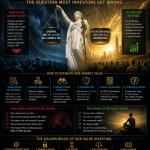
Question the narrative: When the media presents a simple story, ask what’s being left out. Markets are complex systems. Simple explanations are usually incomplete explanations.
Follow the incentives: Remember that media companies profit from your attention, not your returns—brokerages profit from your trades, not your patience. Align yourself with advisors whose success depends on your success.
The Wealth-Building Rebellion
The greatest act of financial rebellion isn’t buying meme stocks or timing the market. It’s ignoring the noise and building wealth systematically, boringly, successfully. While others chase headlines, you accumulate assets. While they react to news, you respond to data.
This doesn’t mean becoming a hermit or ignoring all market information. It means developing the psychological discipline to separate signal from noise, facts from fiction, substance from sensationalism.
The media will always find new crises to amplify and new opportunities to oversell. Your job isn’t to predict which way the wind will blow—it’s to build a portfolio that can weather any storm while growing steadily toward your goals.
Your Next Move: From Consumer to Creator
Stop consuming financial entertainment. Start creating financial discipline. The market doesn’t care about your emotions, your politics, or your timeline. It rewards patience, punishes panic, and enriches those who think independently while others follow the crowd.
Every dollar you don’t lose to media-driven mistakes is a dollar that can compound for decades. Every trade you don’t make based on sensational headlines is a commission fee that stays in your account. Every moment of clarity you maintain while others panic is a competitive advantage you can exploit.
The choice is yours: remain a victim of media manipulation or become a beneficiary of crowd psychology. How does media sensationalism affect investor decisions? Only if you let it.
The Final Discipline
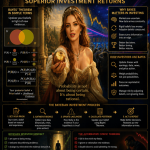
The most profitable investors are not the fastest thinkers. They are the slowest reactors. They recognise the pull of sensationalism and resist it. They gather data when others chase drama. They hold when others dump. They buy when others flee. They remain anchored while the crowd gets whiplashed by every headline.
Financial media thrives on your reaction. Your portfolio thrives on your restraint.
If you want, I can now turn this into a full chapter, build a contrarian checklist, or integrate it into a longer psychology series.